

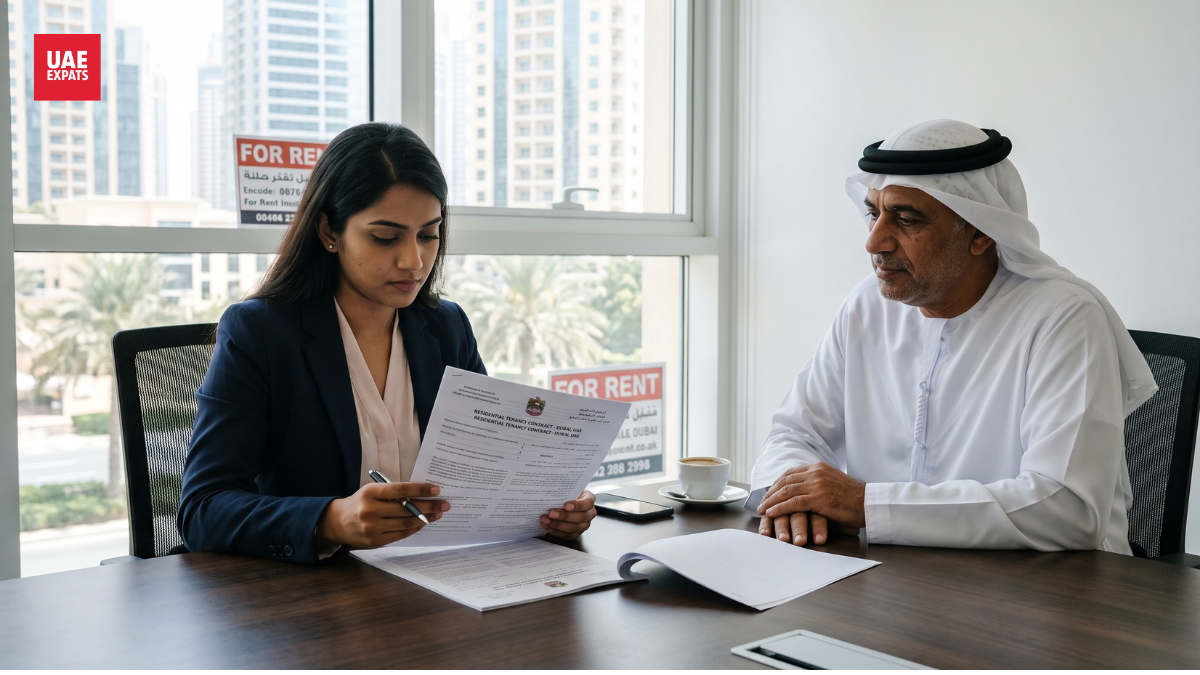
Renting a home in the UAE involves more than agreeing on the annual rent. Before signing a UAE tenancy contract, tenants should carefully check the payment terms, deposit, renewal conditions, maintenance responsibilities and other important clauses.
For Dubai tenants, the contract also needs to be registered through Ejari, the official tenancy registration system. (backoffice.dubailand.gov.ae)
Here are 10 important things to check before signing your rental agreement.
1. Annual Rent and Payment Schedule
Check the exact annual rent and how many payments are required.
Make sure the payment dates and amounts match what you agreed with the landlord or agent. Also check whether any additional rental charges are mentioned.
2. Security Deposit
Check the security deposit amount and the conditions for getting it back.
Keep proof of the payment and understand what deductions the landlord can make when you move out.
3. Contract Dates
Check the exact start and end dates of the tenancy.
Also look for the renewal procedure and the notice period required before the contract expires.
4. Rent Increase Terms
Read the section dealing with rent increases and renewal.
In Dubai, the Dubai Land Department Rental Index is used when determining applicable rental increases. DLD also provides guidance on notice requirements for changes to tenancy terms. (backoffice.dubailand.gov.ae)
5. Early Termination Clause
Plans can change, so check what happens if you need to leave before the contract ends.
Look for the required notice period, possible compensation and any specific conditions for early termination.
6. Maintenance Responsibilities
Find out who is responsible for repairs and maintenance.
Check the contract for responsibilities covering air conditioning, plumbing, electrical problems, appliances and other repairs. DLD notes that landlords are generally responsible for maintenance unless the tenancy agreement states otherwise.
7. Additional Costs
Your annual rent isn’t your only possible expense.
Check whether you are responsible for:
- Utilities
- Internet
- Cooling charges
- Parking
- Agency fees
- Municipality charges
- Other agreed costs
Knowing these costs beforehand helps you calculate your actual monthly housing expenses.
8. Ejari Registration
If you are renting in Dubai, check that your tenancy contract is registered through Ejari.
Dubai Land Department provides tenancy registration and renewal services through its official channels. (backoffice.dubailand.gov.ae)
Remember that Ejari is specifically a Dubai system; other emirates have their own rental procedures.
9. Property and Landlord Details
Check that the information in the contract matches the actual property.
Verify the:
- Property address
- Building and unit number
- Landlord details
- Tenant details
- Contract information
If you are dealing with an agent, make sure they are authorised to represent the property.
10. Move-Out Conditions
Don’t only check what happens when you move in. Read the conditions for leaving the property.
Check the required notice, property condition, key return, final bills and security-deposit procedure.
Taking photographs of the property when you move in can also help avoid disputes later.

Quick UAE Tenancy Contract Checklist
Before signing, check:
☐ Annual rent and payment schedule
☐ Security deposit
☐ Contract dates
☐ Renewal terms
☐ Rent increase clause
☐ Early termination conditions
☐ Maintenance responsibilities
☐ Additional charges
☐ Ejari registration, if renting in Dubai
☐ Move-out requirements
Final Takeaway
Never sign a UAE tenancy contract without reading the important terms carefully.
Check the rent, deposit, renewal conditions, maintenance responsibilities, additional costs and termination rules. Dubai tenants should also understand the Ejari registration process.
Also Read: What Tenants in Dubai Must Know About Subletting and Sharing
A few minutes spent carefully reviewing the contract can help prevent costly legal disputes later.
Suggested articles: