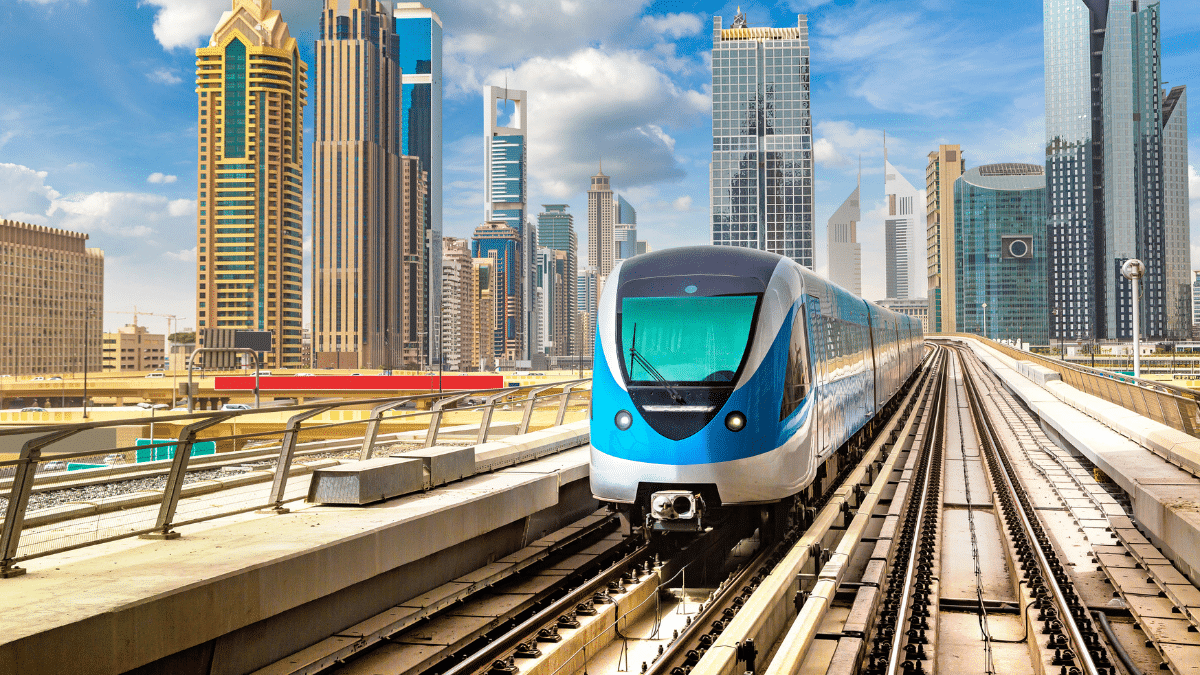
The Dubai Metro has become the backbone of public transportation in the emirate, connecting millions of residents and visitors to key destinations across the city. As we move into 2026, understanding the metro network is more important than ever for anyone living in or visiting Dubai.
Whether you’re a new resident, a daily commuter, or a tourist exploring the city, having access to the latest metro map is essential for planning your journeys efficiently.
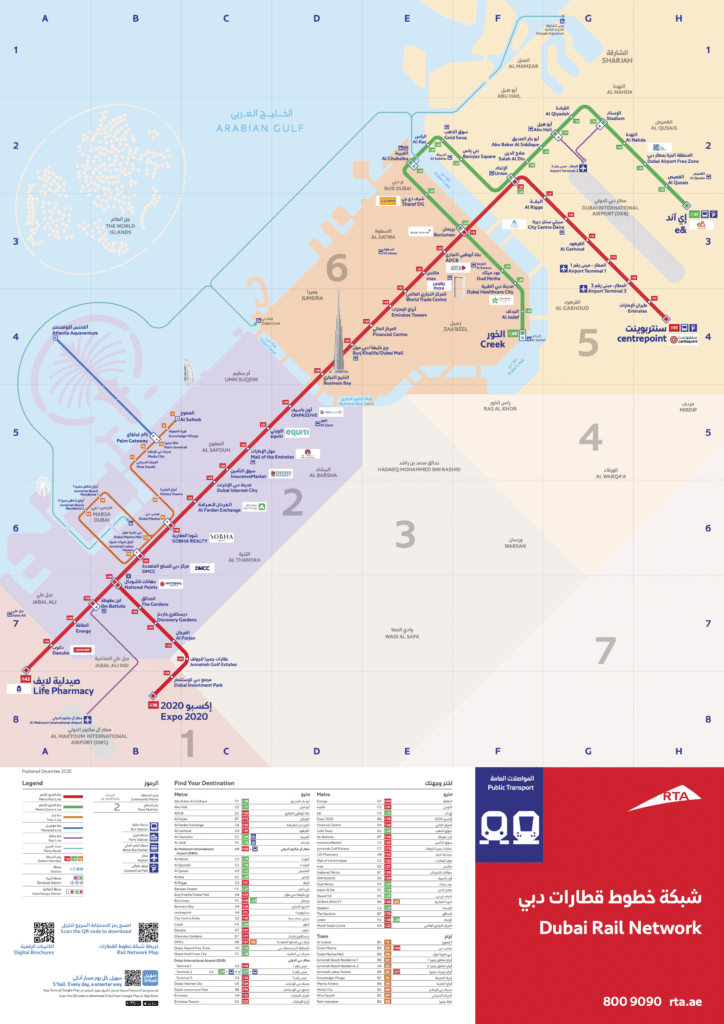
Download the Official Dubai Metro Map 2026: Click here for the high-resolution PDF map
This updated map shows all current stations, routes, and interchange points across both metro lines. Save it to your phone or print it out for easy reference while traveling.
Overview of Dubai Metro
The Dubai Metro is one of the world’s longest fully automated and driverless rail networks. Operated by the Roads and Transport Authority (RTA), it offers a fast, affordable, and air-conditioned way to travel across Dubai.
The system currently operates two main lines that serve different parts of the city. Together, they connect numerous stations across Dubai’s most important areas.
Dubai Metro Lines
Red Line
The Red Line is the longer of the two metro lines, running from Rashidiya in the northeast to Expo 2020 in the southwest.
This line serves major residential, commercial, and tourist areas including:
- Dubai International Airport
- Deira and Bur Dubai
- Downtown Dubai and Burj Khalifa
- Dubai Marina
- Expo 2020
The Red Line is particularly useful for travelers arriving at the airport and those working in Business Bay, DIFC, or the marina areas.
Green Line
The Green Line runs from Etisalat in the northeast to Creek in the central area of Dubai.
Key areas served by the Green Line include:
- Al Qusais
- Healthcare City
- Al Fahidi (historical district)
- Bur Dubai and Al Karama
- Oud Metha
- Creek
This line is ideal for accessing Dubai’s older neighborhoods and cultural sites.
All Dubai Metro Stations
Red Line Stations
The Red Line connects eastern and western Dubai with the following stations:
- Life Pharmacy
- Danube
- Energy
- Ibn Battuta
- Expo 2020
- Dubai Investment Bank
- Jumeirah Golf Estates
- Al Furjan
- Discovery Gardens
- The Gardens
- National Paints
- DMCC
- Shoba Realty
- Al Fardan Exchange
- Dubai Internet City
- Insurance Market
- Mall of the Emirates
- Equiti
- Onpassive
- Business Bay
- Burj Khalifa/Dubai Mall
- Financial Center
- Emirate Towers
- World Trade Center
- Max
- ADCB
- Burjman
- Union
- Al Rigga
- City Center Deira
- Al Garhoud
- Airport Terminal 1
- Airport Terminal 3
- Emirates
- Centerpoint
Green Line Stations
The Green Line operates the following stations across central and eastern Dubai:
- Etisalat
- Al Qusais
- Dubai Airport Free Zone
- Al Nahda
- Stadium
- Al Qiyadah
- Abu Hail
- Abu Baker Al Siddique
- Salah Al Din
- Union
- Baniyas Square
- Gold Souq
- Al Ras
- Al Ghubaiba
- Sharaf DG
- BurJuman
- Oud Metha
- Dubai Healthcare City
- Al Jadaf
- Creek
Interchange Stations
Interchange stations are crucial connection points where passengers can switch between the Red and Green lines without leaving the metro system.
There are currently two main interchange stations:
Union Station
Located in Deira, Union Station connects both lines and serves the busy Al Rigga area. This is one of the most important transfer points for commuters traveling between eastern and central Dubai.
BurJuman Station
Situated in Bur Dubai, BurJuman is an interchange station that provides access to the popular BurJuman shopping mall and connects passengers traveling between different parts of the city.
All interchange stations are well-signposted with clear directions to help passengers navigate between lines smoothly.
Dubai Metro Timings 2026
Understanding metro operating hours is essential for planning your travel.
Monday to Thursday
- First train: 5:00 AM
- Last train: 12:00 AM (midnight)
Friday Timings
- First train: 5:00 AM
- Last train: 1:00 AM (next day)
Saturday Timings
- First train: 5:00 AM
- Last train: 12:00 AM (midnight)
Sunday Timings
- First train: 8:00 AM
- Last train: 12:00 AM (midnight)
Public Holidays
During public holidays and special occasions like Ramadan, timings may vary. The RTA typically announces schedule changes in advance through their official channels.
It’s always wise to check the RTA website or official app before traveling on holidays or during special events.
How to Use Dubai Metro
Nol Card
To ride the Dubai Metro, you need a Nol Card, which is a rechargeable smart card accepted across all RTA public transport.
There are different types of Nol Cards:
- Red Ticket: For occasional travelers, valid for limited trips
- Silver Card: Standard card for regular users
- Gold Card: For Gold Class travel
- Personal Card: For Security and concession fares
- Nol Travel Card: Offers and discounts for residents and tourists
You can purchase and top up Nol Cards at any metro station, authorized retailers, or through the RTA app.
Fare Zones
Dubai Metro uses a zone-based fare system. The city is divided into zones, and your fare depends on how many zones you cross during your journey.
Fares are affordable, making the metro an economical choice for daily commuting.
Classes of Travel
The metro offers two classes:
- Regular cabins: Standard seating for all passengers
- Gold Class cabins: Premium cabins with more spacious seating (requires Gold Class Nol Card or ticket)
Women and children also have dedicated cabins for added comfort and privacy.
Tips for Riding Dubai Metro
Arrive Early: During peak hours (7-9 AM and 5-8 PM), stations can get crowded. Arriving a few minutes early helps avoid delays.
Download the Map: Keep the Dubai Metro map handy on your phone for quick reference.
Mind the Doors: Platform screen doors and train doors close automatically. Never try to force them open.
Follow Rules: Eating, drinking, and sleeping are prohibited on the metro. Fines apply for violations.
Use the App: The RTA Dubai app provides real-time journey planning, station information, and Nol Card top-up options.
Benefits of Using Dubai Metro
The metro offers several advantages over driving or taking taxis:
Cost-Effective: Significantly cheaper than daily taxi rides or fuel costs
Time-Saving: Avoids traffic congestion, especially during rush hours
Environmentally Friendly: Reduces carbon emissions and supports sustainable transportation
Reliable: Trains run on schedule with minimal delays
Comfortable: Air-conditioned cabins provide relief from Dubai’s heat
Conclusion
The Dubai Metro remains one of the most efficient and convenient ways to navigate the city in 2026. Whether you’re commuting to work, exploring tourist attractions, or simply avoiding traffic, the metro network connects you to most major destinations across Dubai.
By understanding the routes, stations, and timings outlined in this guide, you can make the most of this world-class public transport system. Don’t forget to download the official Dubai Metro Map 2026 to keep with you for easy reference.
Safe travels on the Dubai Metro!