
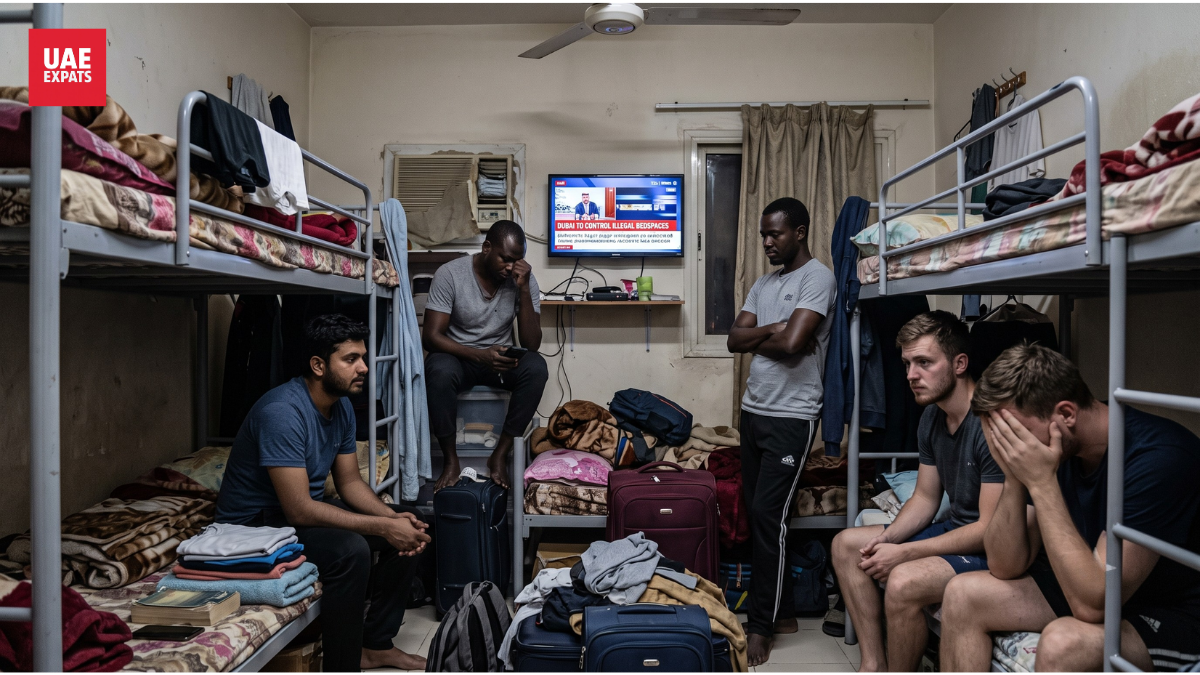
Dubai is introducing major changes to its shared housing rules, bringing room-sharing, bed spaces and other shared accommodation arrangements under a formal regulatory framework. Law No. (4) of 2026 is expected to take effect in late August, with strict requirements for landlords, operators and residents.
The new Dubai shared housing law is designed to tackle overcrowding, improve safety and bring greater transparency to a sector widely used by expatriates looking for affordable accommodation. It applies across Dubai, including special development zones and free zones, while collective labour accommodation remains governed separately.
What Dubai’s New Shared Housing Rules Mean
The law does not ban people from sharing apartments or houses. Instead, it creates a regulated system under which residential units used for shared housing must meet approval, occupancy, health, safety and management requirements.
One of the biggest changes is the introduction of a permit requirement for shared housing. Owners or authorised operators cannot simply convert a normal residential property into shared accommodation without obtaining the required approval from the relevant authority.
The rules also address how shared units are occupied and managed. Authorities will set requirements covering occupancy, available space, safety standards and the use of common areas, with the aim of preventing overcrowding and unsafe living conditions.
Can tenants sublet rooms in Dubai?
The new framework is particularly significant for tenants who rent a property and then offer individual rooms or bed spaces to others. Under the law, occupants are not permitted to sublet the unit or spaces allocated to them, making informal room-by-room subleasing a major compliance risk.
This could affect popular arrangements where a main tenant collects rent from several roommates without the required authorisation. Residents should therefore check their tenancy arrangement carefully before paying for a room or bed space advertised through social media or informal rental groups.
Dubai Shared Housing Fines Can Reach AED 1 Million
The headline penalty is a maximum AED 1 million fine for repeat violations. Fines for violations can range from AED 500 to AED 500,000, with repeat offences potentially attracting a doubled penalty, subject to the AED 1 million ceiling.
The maximum penalty does not mean every tenant or landlord caught breaking a rule will automatically receive an AED 1 million fine. The actual penalty depends on the nature and seriousness of the violation and whether it is repeated.
Authorities can also take measures beyond financial penalties, including suspending or cancelling permits and taking action against non-compliant accommodation. This makes compliance particularly important for landlords and operators running multiple shared units.
Existing Shared Housing Gets Time to Comply
Existing shared-housing arrangements will reportedly get one year to comply with the new Dubai shared housing rules, so the new law does not mean residents must immediately vacate their homes when it takes effect. The authorities may also grant a one-time extension where additional time is required to meet the requirements.
This transition period is particularly important for landlords and operators currently running shared accommodation, as they will have time to regularise their properties and obtain the necessary approvals. Residents should nevertheless check whether their current arrangement can legally continue during the transition period rather than assuming all existing room-sharing arrangements are automatically permitted.

What Tenants and Landlords Should Do Now
Tenants living in shared accommodation should verify whether their arrangement is authorised and avoid assuming that every room or bed-space advertisement is legal. Anyone considering moving into shared housing should also understand who is legally entitled to rent the property and whether subletting is permitted.
Landlords and operators should review their properties, occupancy arrangements and existing agreements before the new Dubai shared housing rules take effect. Existing shared-housing arrangements have a transition period to comply, meaning the new framework is not simply an overnight ban on current residents.
For Dubai residents, the key takeaway is simple: shared accommodation is not being banned, but unregulated shared housing is facing much tighter controls. With fines reaching AED 1 million for repeat violations, landlords, operators and tenants should understand the new rules before continuing or entering a shared-housing arrangement.