

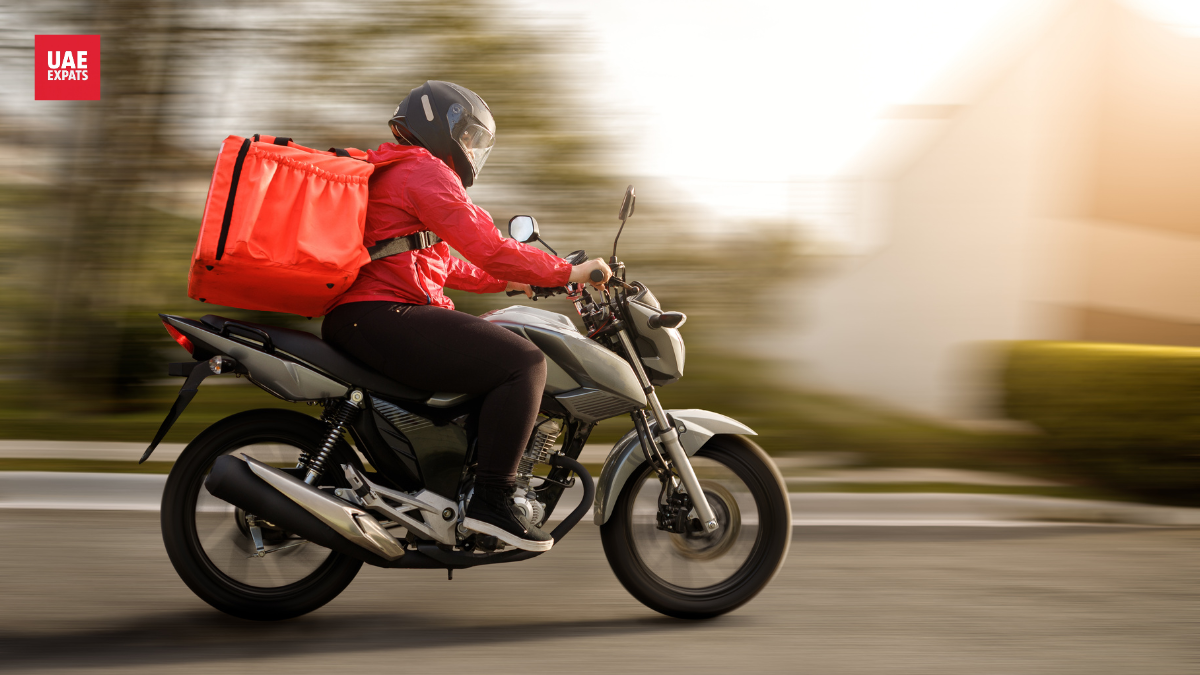
Delivery riders keep the UAE moving. From food orders to parcels, they play a vital role in daily life across Dubai, Abu Dhabi, Sharjah, and every other emirate. Because riders spend long hours on the road, following UAE traffic rules is essential for their own safety and the safety of others.
Breaking traffic laws can lead to fines, black points, vehicle impoundment, or even legal action. This guide explains UAE delivery rider fines, the traffic rules riders must follow, employer responsibilities, and safety tips. It is written for riders, job seekers, employers, and residents who want clear and reliable information.
Traffic Rules Every Delivery Rider Should Know
Wear an Approved Helmet
Every rider and passenger must wear a proper safety helmet at all times. Riding without one is one of the most commonly issued delivery rider traffic violations UAE authorities record.
Hold a Valid Motorcycle Licence
Riders must carry a valid motorcycle licence for the category of bike they operate. An occupational permit may also be required for delivery work in some emirates.
Vehicle Registration and Insurance
Every delivery motorcycle must be properly registered, and it must carry valid insurance. Riding an unregistered or uninsured vehicle is a serious offence under UAE traffic rules.
Obey Speed Limits
Speed limits exist to protect riders and other road users. Rushing to complete deliveries faster does not justify exceeding posted limits.
Lane Discipline
Riders must stay within designated lanes and avoid weaving between vehicles. Lane-splitting and filtering through stopped traffic are not permitted in the UAE.
Using Indicators
Signal clearly before changing lanes or turning. Failing to indicate is a common cause of accidents involving motorcycles.
Avoiding Reckless Driving
Sudden swerving, stunts, and aggressive overtaking put riders and others at serious risk. Reckless behaviour carries some of the heaviest penalties under UAE road safety rules.
Mobile Phone Restrictions
Using a phone while riding is strictly prohibited. Riders should pull over safely before checking delivery apps or taking calls.
Carrying Delivery Boxes Safely
Delivery boxes must be secured properly and should not obstruct the rider’s balance, visibility, or ability to control the bike.
Riding Only on Permitted Roads
Motorcycles must stay on roads that are legally open to them. Riding on restricted highways, pedestrian paths, or prohibited routes can result in fines and impoundment.
UAE Delivery Rider Traffic Fines
The table below summarises commonly issued UAE traffic rider fines. These figures are based on published RTA and Dubai Police penalty schedules and may vary slightly by emirate. Always confirm current amounts with the traffic authority in your emirate, as motorcycle traffic fines UAE-wide are periodically reviewed and updated.
| Violation | Fine (AED) | Black Points | Vehicle Impoundment (if applicable) |
| Speeding (varies by amount over limit) | 400 | 6 – 23 | Up to 60 days for serious cases |
| Running a red light | 1,000 | 12 | 30 days |
| Riding without a helmet | 500 | 4 | Not applicable |
| Using a mobile phone while riding | 800 | 4 | Not applicable |
| Dangerous or reckless driving | 2,000 | 23 | Up to 60 days |
| Reckless overtaking | 200 – 600 | 3 – 6 | Up to 7 days (emirate-dependent) |
| Riding without a valid licence | 5,000 | 12 | Up to 3 months imprisonment possible |
| Riding an unregistered motorcycle | 500 | 4 | 7 days |
| Driving without insurance | 500 | 4 | 7 days |
| Ignoring traffic signs | 500 | 4 | Not typical |
| Riding on prohibited roads | 1000 – 3,000 | Varies | Possible for serious cases |
Note: Fine amounts, black point allocations, and impoundment periods can differ between Dubai, Abu Dhabi, Sharjah, and other emirates. Authorities also update penalties from time to time, so riders and employers should check the RTA, Dubai Police, Abu Dhabi Police, or the relevant emirate’s traffic department for the latest figures before relying on any specific amount.
Employer Responsibilities
Employers of delivery riders share responsibility for road safety. They are expected to:
- Maintain roadworthy motorcycles through regular servicing and inspection.
- Provide required safety equipment such as helmets and reflective jackets.
- Train riders on UAE traffic rules and safe riding practices.
- Follow UAE labour and occupational safety requirements for delivery staff.
- Support riders during extreme weather conditions by following applicable UAE occupational safety requirements, monitoring official weather advisories, and taking appropriate measures to reduce risks from extreme heat, heavy rain, or other hazardous conditions.
Companies offering delivery rider jobs across the UAE are expected to comply with applicable labour, occupational health, and road safety requirements as part of their legal responsibilities.
Safety Tips for Delivery Riders
- Plan delivery routes in advance to avoid rushing.
- Wear reflective gear, especially when riding at night.
- Check tyres and brakes before every shift.
- Avoid distractions, including phone notifications, while riding.
- Stay hydrated, particularly during hot months.
- Follow official weather advisories and slow down in rain or fog.
- Respect posted speed limits at all times.
- Maintain a safe following distance from other vehicles.
Common Mistakes Riders Make
Speeding to complete deliveries. Riders under time pressure often exceed speed limits, which increases fines and accident risk.
Ignoring helmet rules. Some riders remove helmets for short trips, not realising this still counts as a violation.
Using phones while riding. Checking delivery apps mid-ride is illegal and dangerous, even at low speed.
Skipping vehicle maintenance. Worn brakes or tyres can cause accidents and additional fines if defects are detected.
Parking illegally. Stopping in no-parking zones for quick drop-offs often results in parking fines.
Ignoring road signs. Missing “no entry” or “no motorcycle” signs leads to avoidable penalties.
Frequently Asked Questions
What is the fine for riding without a helmet in the UAE?
Riding without an approved helmet typically results in an AED 500 fine and 4 black points for both rider and passenger.
Can delivery riders receive black points?
Yes. Black points apply to riders in the same way they apply to car drivers, and accumulating too many points can lead to licence suspension.
Who pays traffic fines—the rider or employer?
In most cases, the fine is issued against the licence or vehicle of the person riding at the time, so the rider is typically responsible. Some employers may cover certain fines as part of company policy, but this varies by company.
Can repeated violations affect employment?
Yes. Repeated traffic violations can affect a rider’s employment, since employers may face liability and licensing issues linked to their riders’ driving records.
What happens if a rider causes an accident?
Consequences depend on the severity of the accident and who is found at fault. This can range from fines and black points to legal proceedings in serious cases.
Are traffic rules the same across all UAE emirates?
Core federal traffic laws apply across the UAE, but specific fine amounts, enforcement practices, and some local rules can differ between emirates such as Dubai, Abu Dhabi, and Sharjah.
Conclusion
Following UAE traffic rules protects delivery riders and everyone else on the road. Safe riding habits help riders avoid fines, black points, and legal trouble while supporting a smoother, more sustainable delivery industry. Because UAE delivery rider fines and regulations can change, riders and employers should always verify the latest rules through the RTA, Dubai Police, or the relevant traffic authority in their emirate.