

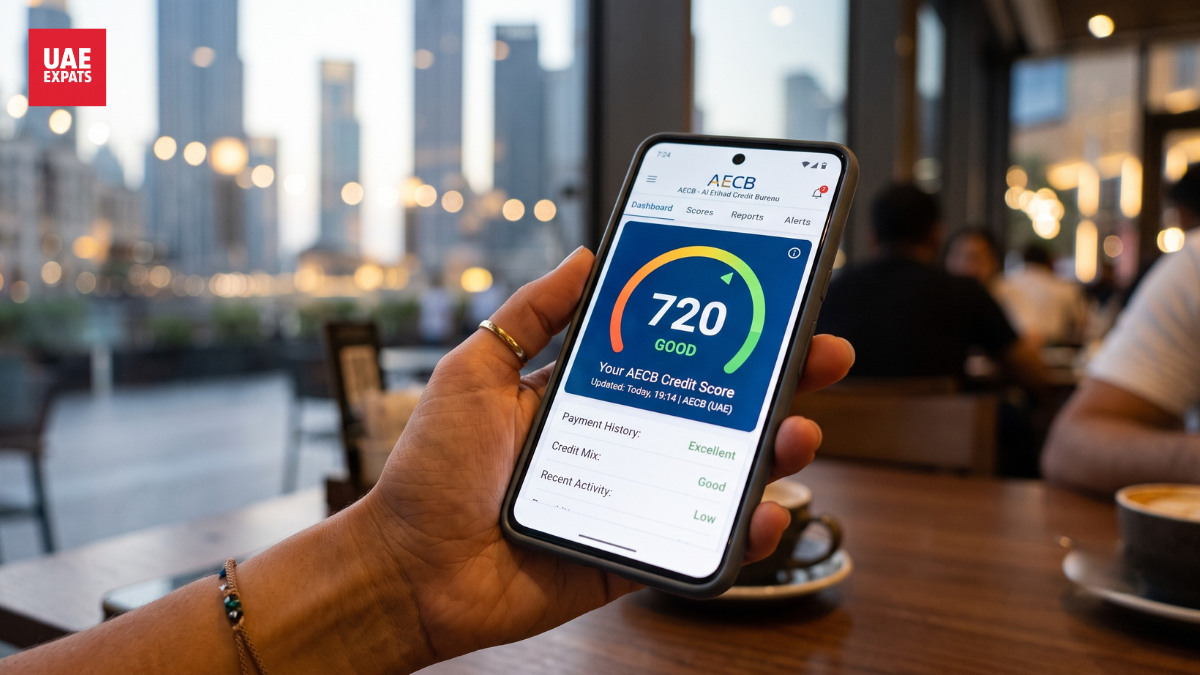
If you’re planning to apply for a loan, credit card or car finance in the UAE, your credit score can play an important role. Banks and lenders use it to assess your creditworthiness along with factors such as income and existing financial obligations.
Knowing your UAE credit score before applying for credit can help you understand your financial standing and spot any errors in your credit report. Here’s how you can check your score and what you can do to maintain a healthy credit profile.
What Is a UAE Credit Score?
A credit score is a three-digit number that reflects your history of repaying loans, credit cards, and other financial obligations. In the UAE, this score is generated by the Al Etihad Credit Bureau (AECB), a federal government entity that collects credit data from banks, finance companies, telecom providers, and other sources.
Lenders use your AECB credit report and score, along with their own internal lending criteria, to assess your creditworthiness and the likelihood that you will repay new credit on time.
What Is the UAE Credit Score Range?
The UAE credit score ranges from 300 to 900. A higher score generally indicates lower credit risk, meaning you’re seen as more likely to repay on time.
While AECB does not publish official score bands or approval cut-offs, scores above around 700 are commonly viewed by many lenders as relatively strong. Lower scores may make it more difficult to qualify for loans or credit cards or may result in less favourable terms. Each bank and lender uses its own internal lending criteria in addition to the AECB score, so a high score does not guarantee approval.
How to Check Your UAE Credit Score
You can check your UAE credit score through AECB’s official website or mobile app.
- Registration: Log in using UAE Pass. If you don’t already have a UAE Pass account, you’ll need to create one first.
- Documents needed: Your Emirates ID is required for identity verification. Depending on the access method, you may also need to verify your identity using an OTP sent to your registered mobile number.
- Availability: Individuals can check their own credit score online or through the mobile app without visiting a branch.
- Fees: A fee applies to access your credit score and/or credit report (see below for current pricing).
Once payment is complete, your credit score and/or report is typically available immediately as a downloadable PDF.
How Much Does It Cost to Check Your UAE Credit Score?
According to AECB’s official pricing, individuals currently pay:
- AED 10.50 (including VAT) for the Credit Score alone
- AED 84 (including VAT) for the full Credit Report
The AED 10.50 (including VAT) rate applies strictly to individual credit scores. Companies or business entities pay higher rates depending on the specific commercial credit report or business product requested (such as full company credit reports or specialised indicators). These are the official individual and business rates published by AECB, but pricing can change, so it’s worth confirming the current fee on the official website or app before you pay.
How to Get Your UAE Credit Report
Your credit score and credit report are related but different. The credit score is a three-digit number that summarises your creditworthiness, while the UAE Credit Report provides a more detailed picture of your credit history.
The report typically includes:
- Your personal identity information
- Your credit score
- A summary of your loans, credit cards, and other credit contracts
- Your payment history for the past 36 months
- Any court-ordered financial obligations
- Your Income Utilisation Ratio (IUR), which shows how your scheduled monthly payments compare with your last reported income
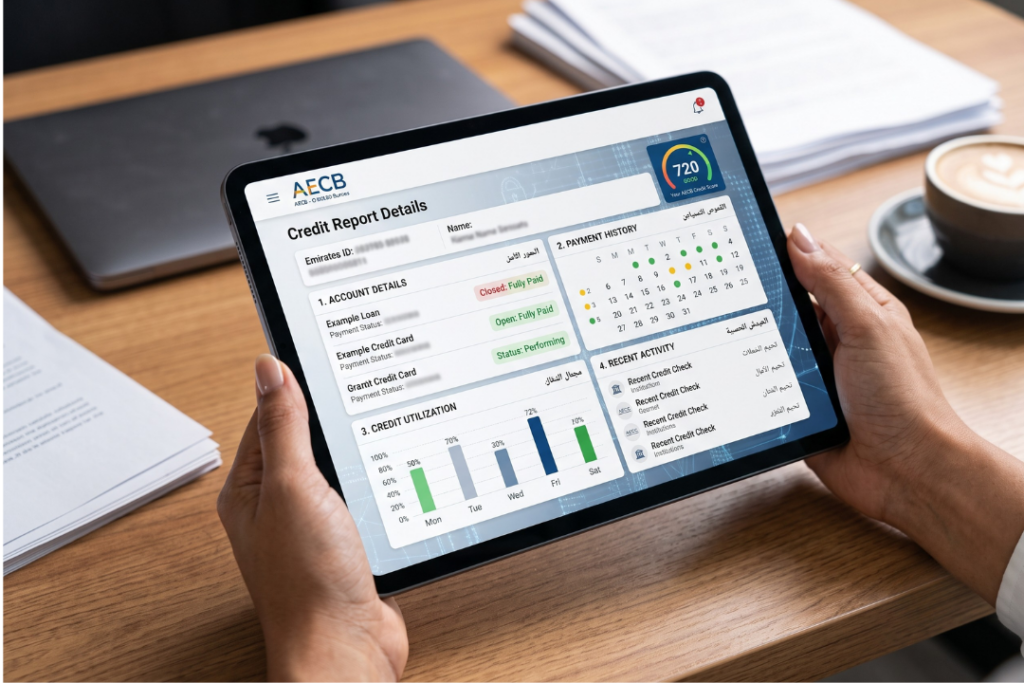
You can request your credit report through the same Etihad Credit Bureau website or mobile app used to check your credit score. After logging in with UAE Pass and paying the applicable fee, the report is typically available instantly as a downloadable PDF.
What Can Affect Your UAE Credit Score?
Several factors feed into your score, including:
- Payment history — paying bills and instalments on time
- Outstanding debts — how much you currently owe
- Credit utilisation — how much of your available credit limit you’re using
- Number of credit facilities — how many loans and cards you hold
- Recent credit applications — frequent applications in a short period can be a signal
- Defaults and missed or delayed payments — including financial obligations arising from bounced cheques where they are reported to AECB
AECB does not publish the exact formula or weightings used to calculate credit scores, so any claims assigning specific percentage values to individual factors should be treated with caution.
How to Improve Your UAE Credit Score
There’s no instant way to improve your credit score, but consistent financial habits can help over time:
- Pay all loan instalments, credit card bills, and other credit obligations on time.
- Keep outstanding balances and your credit utilisation ratio low relative to your available credit limits.
- Avoid applying for multiple loans or credit cards within a short period, unless necessary.
- Review your credit report regularly and report any inaccuracies to Etihad Credit Bureau or the relevant lender so they can be investigated and corrected if needed.
What If Your Credit Report Has an Error?
If you spot incorrect or outdated information on your report, you can submit a Data Correction Request through the Etihad Credit Bureau website or app. Etihad Credit Bureau forwards the request to the relevant information provider (such as your bank, finance company, telecom provider, or utility), which is responsible for reviewing and correcting the data if necessary.
Under current UAE Central Bank regulations, information providers are generally required to respond within 10 working days to data correction requests. However, the overall time to resolve a case may vary depending on the complexity of the issue and the provider’s processing time.
Why Should You Check Your Credit Score?
Checking your credit score before applying for a major financial product—such as a mortgage, car loan, or credit card—can help you understand how lenders may view your creditworthiness. It also gives you an opportunity to review your credit report for errors and request corrections before submitting an application. While a strong credit score can improve your chances, lenders also consider factors such as your income, existing debt, affordability, and their own internal lending criteria.
Frequently Asked Questions
How can I check my UAE credit score online?
Log in to the Etihad Credit Bureau website or app using UAE Pass, select the credit score option, and pay the applicable fee to view it instantly.
What is a good credit score in the UAE?
There’s no single official threshold, but scores above roughly 700 are generally viewed favourably by banks. Each lender also applies its own criteria.
Is checking your credit score free?
No. AECB charges AED 10.50 (including VAT) for the Credit Score and AED 84 (including VAT) for the full Credit Report. Confirm the current price on the official platform before paying, as fees can change.
How often should I check my UAE credit score?
There’s no fixed rule, but it’s sensible to check before applying for any major credit product, and periodically to review your report for accuracy.
Can a low credit score affect a loan application?
Yes. A low score can lead to rejection or less favourable terms, though banks also weigh other factors like income and existing obligations.
Conclusion
Your UAE credit score is one of the first things banks and lenders look at when you apply for a loan, credit card, or car finance — so it pays to know where you stand before you apply. Checking it through the official Etihad Credit Bureau channels only takes a few minutes, and reviewing your report regularly helps you spot errors early and stay on top of your financial standing. With a few consistent habits, like paying on time and keeping your credit utilisation low, you can steadily build and maintain a healthy score over time.
Note: Information, fees and procedures may change. Always check the official AECB and UAE government websites for the latest updates before taking any action.